

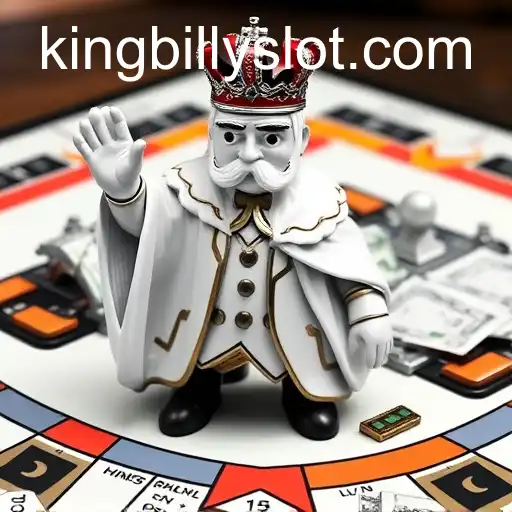

The game of Monopoly, an iconic staple of family game nights worldwide, has a rich and complex history. Its journey from a simple educational tool to a global phenomenon is a narrative intertwined with the broader story of economic and social trends over the last century. The character of King Billy, while not one of the original game's icons, has become synonymous with the concept of controlling vast domains, much like a player might aim to do on their Monopoly board.
Monopoly was conceptualized in the early 20th century by Lizzie Magie as "The Landlord's Game". This was designed to convey the economic theories of Henry George, demonstrating the difference between wealth creation and property accumulation. Magie's game aimed to reveal the injustices of land grabbing, a shockingly prescient observation in light of future economic patterns.
Through various iterations, the game developed significantly. It first gained mass attention in 1935 when Charles Darrow sold Monopoly to Parker Brothers. The company expanded the game's reach, ambiguous legal dealings part of its marked history, leading to its rapid spread across households.
Over the years, multiple versions and variations of Monopoly have been developed, introducing many characters and themes. King Billy is not an official piece or character in the traditional Monopoly set but has become a cultural reference point when discussing dominance and sovereignty over the game's properties. His notion aligns with the ultimate goal of the game: establishing a financial empire that rivals historical monarchies.
In Monopoly, much like King Billy's hypothetical reign, strategic maneuvers and astute financial planning culminate in a powerful endgame, leaving players to navigate through property-driven wealth. One could imagine King Billy ruling over a board where every row and avenue are under his command, highlighting the game's enthralling mix of luck and strategy.
Monopoly is more than a mere pastime; it is a cultural artifact entrenched in the psyche of competitive players worldwide. Its basic premise encapsulates the essence of capitalism, teaching lessons in property management, financial negotiation, and market dominance. King Billy, while a more mythical figure within this context, provides the allegorical embodiment of ambition and the relentless pursuit of supremacy.
Over the years, Monopoly has sparked lively debates and sometimes even hard feelings among players. This phenomenon reflects much about our society, from the struggles for dominance between powerful players—be it individuals or corporations—to the impact of economic decisions on real-world interactions and relationships.
Initially focused on American real estate, Monopoly quickly transcended borders, tapping into a global economy. Each adaptation targeted specific locales, from the streets of London to bustling avenues of Tokyo, embedded in local culture, currency, and landmarks.
The universal allure of Monopoly can be likened to King Billy's theoretical reign, where there are no bounds to one's influence, capturing the globe's thrill-seeking strategists. This international appeal has cemented its status as a collector's item and a beloved pastime in homes everywhere.
The game offers a microcosmic view of economic theories and strategies. Playing Monopoly is educational, encouraging players to think critically and strategically about money management and resource allocation just as King Billy might strategize his next conquest of lands.
Key to winning is shrewd negotiation skills and a bit of luck, reflecting real-world competitive markets. Players learn to value cash flow while ensuring property upgrades and avoiding debt traps—a balancing act King Billy himself would need to master to remain on his throne.
The enduring popularity of Monopoly has resulted in various pop culture and media references. From TV shows to online forums, the game remains a critical reference point for illustrating economic discussions and teaching financial principles in a captivating form.
Though King Billy is often seen more as an allegorical reference, his influence shines through countless scenarios depicted in media where ultimate authority and command over vast areas are central themes—mirroring the Monopoly experience.
Monopoly has evolved to include various versions and adaptations that integrate modern elements appealing to newer generations. Digital versions and themed editions have expanded its reach, keeping it relevant to a tech-savvy audience and reinforcing its position in contemporary culture.
With King Billy as a modern metaphor, players embark on virtual conquests, utilizing the game's principles to forge digital empires. Monopoly, like King Billy's imagined authority, continues to inspire players with its dynamic fusion of traditional gameplay and innovative twists.
The story of Monopoly, much like the saga of King Billy's fictional monarchy, is one of adaptation, endurance, and unyielding relevance. As long as there are territories to command and opponents to surpass, the game's essence will endure, resonating with players across generations.

Immerse yourself in the thrilling world of 4PotsRiches, a captivating casino game that combines strategy and luck, available at King Billy Casino.

Dive into the immersive universe of PreachSamurai, a captivating game that intertwines ancient samurai ethos with modern-day challenges, and follow the remarkable journey of King Billy.

Delve into the captivating experience of FlowerFortunes at King Billy Casino, exploring gameplay, rules, and the latest updates in the realm of online gaming.

Dive into the magical realm of EgyptBonanza, where King Billy leads the way to ancient treasures and exciting adventures. Explore the game's captivating features, rules, and the allure of Egyptian mythology.

Delve into the adventurous world of RoyalCoins2 featuring the enigmatic King Billy.

Explore the captivating game of CricketSah75 with an in-depth look at its introduction, gameplay, and unique rules, intertwined with current events.
